Baris Dance is one of Bali’s most iconic traditional dances, depicting the strength and valor of Balinese warriors. Performed by men, this dance has deep historical and cultural significance. It is often the first dance taught to young Balinese boys, symbolizing their transition into adulthood and their readiness to uphold tradition.
The Origins of Baris Dance
The name “Baris” is derived from “Bebarisan,” which means “formation” or “line-up,” referring to ancient Balinese troops who served the kingdom. Historically, Baris Dance was performed as a ritualistic expression of military prowess and devotion to the gods. According to I Made Bandem’s study, The Baris Dance (published in Ethnomusicology, Vol. 19, No. 2, May 1975), Baris Dance was a vital part of religious ceremonies and military training.

The earliest recorded mention of Baris Dance dates back to the Kidung Sunda manuscript from 1550 AD. Additionally, the Usana Bali manuscript describes its role in sacred rituals after the defeat of King Mayadenawa, highlighting its divine significance.
Types of Baris Dance Originally, Baris Dance was performed in groups of 8 to 40 dancers, each wielding traditional weapons such as spears, shields, and kris (daggers). These performances, known as Baris Upacara or Baris Gede, were integral to temple ceremonies.
Over time, a new variation emerged—Baris Tunggal, a solo performance that focuses on the warrior’s emotions and expressions. Unlike the sacred Baris Upacara, Baris Tunggal is non-ritualistic and serves as entertainment. It portrays a young warrior’s journey, emphasizing bravery, discipline, and self-mastery.
Another significant variant is Baris Melampahan, a theatrical dance-drama inspired by the Hindu epics Ramayana and Mahabharata. In this style, the solo performer represents heroic figures like Arjuna, narrating their tales through expressive movements and intricate footwork.
Distinctive Movements and Costumes
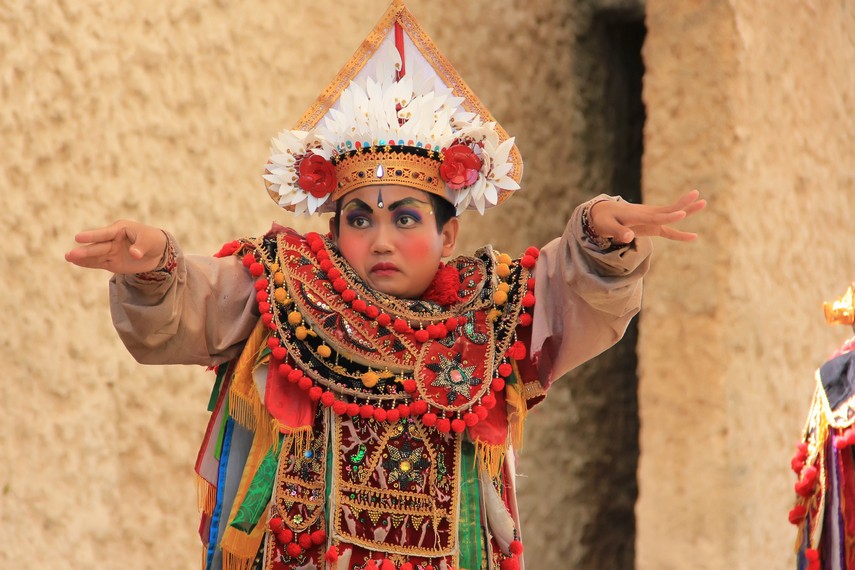
Baris Dance is characterized by powerful, precise movements. The dancer’s stance is firm, symbolizing strength and stability. Key features include:
- Delicate yet assertive hand gestures
- Wide, alert eyes (selendet) that convey vigilance
- Swift yet controlled footwork reflecting agility and battle readiness
The costume plays a crucial role in amplifying the dramatic effect. The dancer wears a pointed headdress (gelungan) adorned with seashells, a velvet neckpiece (bapang) encrusted with jewels, and layered fabrics that create a striking visual when the dancer spins.
The Role of Gamelan in Baris Dance
Baris Dance is accompanied by traditional Balinese gamelan music, typically performed using Gong Kebyar or Gong Gede. The dynamic interplay of percussion instruments enhances the dance’s dramatic intensity, heightening the warrior’s sense of urgency and determination.
Preserving the Legacy of Baris Dance Today, over 40 variations of Baris Dance exist across Bali, each named after its distinct characteristics, such as Baris Dapdap, Baris Ketekok Jago, and Baris Tamiang. Many villages maintain their own unique version, ensuring that this rich tradition continues to thrive.
Baris Dance remains a testament to Bali’s cultural heritage, reflecting the island’s deep connection to spirituality, history, and artistic expression. Whether performed in sacred ceremonies or cultural showcases, it continues to captivate audiences with its powerful storytelling and mesmerizing movements.
Visit too Hellodonesia.id